Twenty minutes after Melissa picked me up from the hospital, I realized we were driving in the wrong direction. She kept saying I needed somewhere safe to recover. Then we pulled up outside a nursing home 80 miles from home, and I saw my suitcase waiting in the lobby before I had agreed to stay.
Melissa kept both hands on the steering wheel.
I looked through the passenger window.
“Then where are we going?”
“Just somewhere you can get stronger.”
“Then where are we going?”
That answer bothered me more than if she’d named a place.
I shifted carefully in the passenger seat. My bruised hip objected immediately.
That answer bothered me more than if she’d named a place.
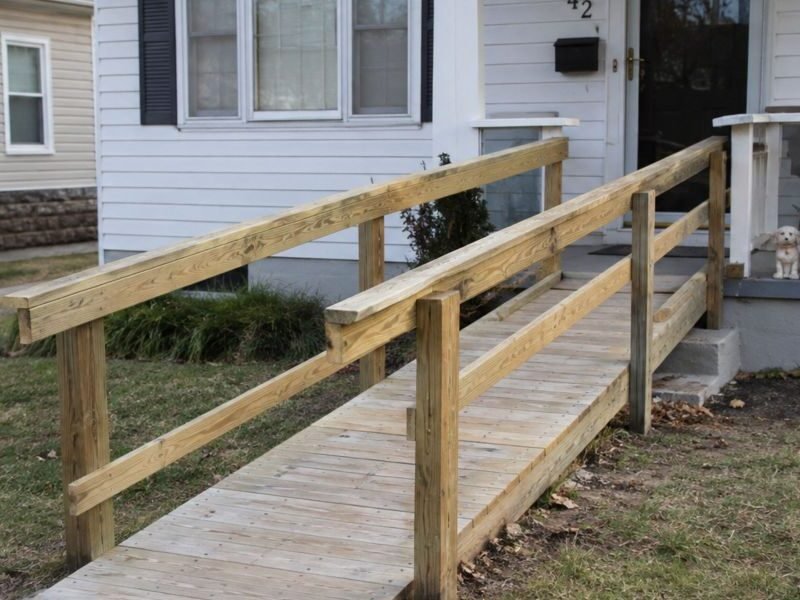
Two days earlier, I’d slipped on my back steps while carrying a bag of birdseed. Nothing broke, but I landed hard enough to spend two nights in the hospital while doctors made sure nothing more serious had happened.
Two days earlier, I’d slipped on my back steps while carrying a bag of birdseed.
And until that fall, I drove myself wherever I pleased, cooked my own meals, paid my own bills, and spent four afternoons a week reminding my grandson Larry that multiplication did not become optional just because he disliked seven.
Until that fall, I drove myself wherever I pleased.
I knew I needed help for a little while.
What I didn’t know was why my daughter wouldn’t tell me where she was taking me.
An hour later, she turned into a landscaped driveway.
My daughter wouldn’t tell me where she was taking me.
The sign out front answered the question.
“You brought me to a nursing home?”
“You brought me to a nursing home?”
“That’s a prettier way of saying it.”
“You haven’t told me what this is.”
That was when I became afraid.
Not because of the building.
It looked pleasant enough.
Flower beds. White rocking chairs. A fountain near the entrance.
That was when I became afraid.
I was afraid because Melissa already knew exactly where we were going.
Inside the lobby, a woman behind the desk greeted us by name.
On top of it were two framed photographs from my bedroom.
Melissa already knew exactly where we were going.
One was Robert and me on our thirty-fifth anniversary.
The other was Larry at six, grinning through a gap where his front teeth should have been.
“Mom, I already arranged everything.”
One was Robert and me on our thirty-fifth anniversary.
“You packed my suitcase?”
“You’ll have meals here. Nurses. Physical therapy if you need it. People around all the time.”
“If I’d asked, you would’ve said no.”
“Of course I would have.”
A woman at the desk suddenly became very interested in her computer.
Melissa reached for my hand.
“Of course I would have.”
“That’s not an answer,” I said.
“It’s for your own good.”
There was a phrase that had apparently survived my entire adulthood just waiting for my daughter to use it on me.
“It’s for your own good.”
Melissa touched her purse.
“I’ll keep an eye on the house.”
“You shouldn’t be driving right now anyway.”
“I’ll keep an eye on the house.”
Actually kissed me while refusing to give them back.
The facility was clean. Dinner was decent, and a nurse named Patricia brought an extra pillow for my hip. None of that changed the fact that I had never chosen to be there.
That first night, I cried quietly into my pillow.
I had never chosen to be there.
Not because I thought my life was over.
Because I could picture my kitchen eighty miles away.
Larry’s blue mug beside the sink.
His crayons in the drawer next to the table.
I could picture my kitchen eighty miles away.
The pantry door Robert had marked in pencil every year while Melissa was growing up.
Robert always wrote the date beside each line.
Once, when she stood on her toes, he’d written:
Robert always wrote the date beside each line.
Years later, I’d started measuring Larry on the same door.
Robert never got to meet him.
Still, somehow, their pencil marks shared the same wood.
The next morning, I called Melissa.
Robert never got to meet him.
That evening I tried again.
“Everything. Tom and I are handling it.”
“He does homework with me.”
The call ended soon after.
The second day was the same.
“He does homework with me.”
Exactly three days after Melissa left me there, I was sitting beside my window pretending to read when Patricia appeared.
“There’s a little boy here asking for you.”
I was out of the chair before my hip approved.
“There’s a little boy here asking for you.”
Larry stood in the hallway wearing his school backpack.
He closed the distance between us in four quick strides.
I caught him and nearly lost my balance.
Patricia steadied my elbow.
I held Larry by both shoulders.
He clutched the backpack against his chest.
Then Tom appeared in the doorway, holding his car keys.
I looked from him to Larry.
Tom rubbed the back of his neck.
“Grandma, I brought something.”
Apparently that part was new to him too.
Larry hugged the backpack tighter.
“I didn’t want Mom to get rid of it.”
Larry hugged the backpack tighter.
My attention went straight to Tom.
“Get rid of what, sweetie?”
He moved aside a math book, a pencil case, and a crushed packet of crackers.
Then he pulled out an old brass hinge.
“Get rid of what, sweetie?”
I knew it before he finished lifting it from the bag. My legs suddenly felt unreliable, and I grabbed the edge of the bed.
Robert had replaced that hinge twice because the pantry door sagged.
“It’s from your door, Grandma.”
I knew it before he finished lifting it from the bag.
“What happened to my pantry door?”
Tom came farther into the room.
“Melissa told me this was temporary rehab. She said you’d be here a couple of weeks.”
“That’s what she told me too.”
“She said you’re not coming home.”
“She said you’re not coming home.”
Tom pulled over the visitor chair.
“I went to your house this afternoon because Larry wasn’t home when I got there. I found him in your kitchen with a contractor.”
“They’d taken the pantry door down.”
“They’d taken the pantry door down.”
My fingers closed around it.
“Why were they taking it down?”
“Mom said she’s making things safer,” Larry said. “Clearing things out. Replacing a few things.”
“Why were they taking it down?”
Larry wiped his nose on his sleeve.
“The man said the old door was going away.”
“Grandpa’s writing is on it.”
“The man said the old door was going away.”
I turned the hinge in my palm. My eight-year-old grandson had decided a piece of hardware needed rescuing.
Tom said, “Elaine, before you call her, there’s something else.”
“She told me you agreed to all this.”
My eight-year-old grandson had decided a piece of hardware needed rescuing.
“Apparently I’ve been very busy.”
“She said the hospital recommended you not live alone anymore.”
“They recommended help while I recover.”
“That’s not how she explained it.”
“They recommended help while I recover.”
“Why didn’t you call me?”
“Mom said you needed quiet.”
“She told me you were adjusting.”
“I’m not adjusting, Grandma. I missed you.”
“Mom said you needed quiet.”
He climbed carefully onto the edge of my bed.
“She said calling would make you want to come home.”
She answered immediately.
“Why is my pantry door off its hinges?”
“She said calling would make you want to come home.”
“Your son brought me a hinge in his school backpack.”
“No. You listen. What are you doing in my house?”
“By removing a pantry door?”
“Your son brought me a hinge in his school backpack.”
“It swings into the walkway. You could catch your cane on it.”
Not solving the problem I had.
Solving every future problem she could imagine before I got a vote.
“What else have you changed?”
“That’s not what I asked.”
“I moved some things. That’s all.”
“Put the pantry door somewhere safe.”
“What else have you changed?”
“You didn’t throw it away?”
Her answer sounded offended.
For a second, I didn’t know what to do with that.
“You didn’t throw it away?”
Then I asked the question that had been bothering me since the drive.
Then: “This one had good reviews.”
“There are places twenty minutes away with good reviews.”
Apparently he’d never asked either.
Melissa said, “Because I knew what you’d do.”
“You’d keep trying to go home.”
“Because I knew what you’d do.”
I looked at the brass hinge in my palm.
“So you didn’t choose eighty miles because I couldn’t go home.”
“That’s not what I said.”
“You chose it because you knew I’d want to.”
“That’s not what I said.”
Larry stopped swinging his feet.
Melissa’s voice sharpened.
“You were lying outside by yourself.”
“A neighbor called me about my mother. I live two blocks away… do you have any idea what that felt like?”
When Robert died, Melissa had been at work.
By the time she reached the hospital, he was gone.
When Robert died, Melissa had been at work.
For years, she had carried that missed goodbye like something she’d failed to prevent.
“I understand that you were scared,” I said.
I looked down at the hinge.
There was another truth I hadn’t told her.
“I knew it needed fixing.”
“And you didn’t tell me?”
“I kept meaning to call someone.”
Melissa made an angry sound.
For once, I let her have it.
She had earned that anger.
“I should have fixed the railing,” I said.
“I kept meaning to call someone.”
“That doesn’t mean you get to decide where I live.”
I could hear her breathing.
Then I said, “Come here.”
Tom raised his eyebrows but said nothing.
“Come here, Melissa. Bring my keys.”
She arrived ninety minutes later.
The first thing she did was look at Larry.
“You left without telling me.”
She arrived ninety minutes later.
“You took Grandma without telling her.”
I almost told Larry not to speak to his mother that way.
Then I decided Melissa could survive one sentence from an eight-year-old.
“You took Grandma without telling her.”
“Mom, I’m trying to keep you safe.”
“Then why did you stop Larry from calling?”
“I was upset because you said Grandma wasn’t coming home,” Larry said.
“Then what do you need them for?”
For several seconds, she didn’t move.
Then she opened her purse.
The keys landed in my palm with a small metal clink.
I closed my fingers around them.
“I’ve already spoken to the administrator,” I said.
Melissa looked up sharply.
“I’m staying until we have a safe discharge plan.”
She looked at the keys still closed in my hand.
“I’ve already spoken to the administrator.”
“I said I wanted a choice. I didn’t say every choice you made was wrong.”
“The rail gets repaired. I’ll accept help at home until my hip is better. I won’t drive until the doctor clears me.”
For once, she didn’t interrupt.
“But I’m going home,” I said.
“I said I wanted a choice.”
The brass hinge lay beside my keys.
“And when I do, I want to know exactly what you’ve done to my kitchen.”
Melissa looked at the hinge.
“The pantry door is in your garage.”
“The pantry door is in your garage.”
Four days later, I went home. The railing was repaired, the pantry door waited in the garage, and every moved item sat in a labeled box.
Larry ran straight to the door.
That afternoon, the door returned to its hinges.
Later, Melissa reached toward the spare-key hook, then stopped.
“Do you want me to have one again?”
Larry grabbed the pencil from the kitchen drawer.
The door returned to its hinges.
“You were here last week.”
He backed against the pantry door.
My hip complained when I started to stand.
She didn’t reach for the pencil.
“I do not!” Larry protested.
Melissa smiled and placed the pencil over his head.
Melissa looked at eight-year-old Larry.