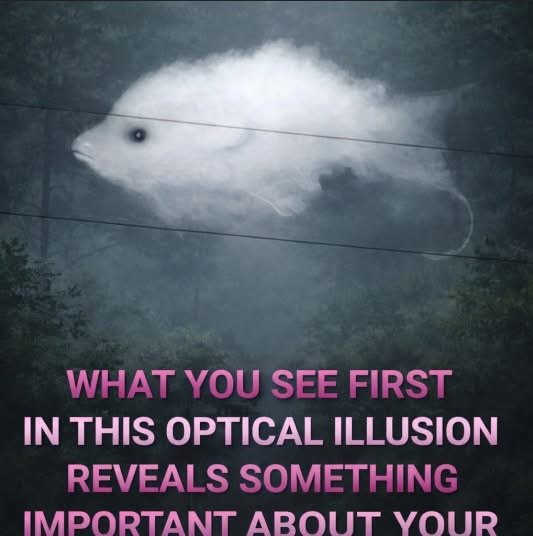
Optical illusions have fascinated people for generations because they reveal how differently the human brain can interpret the same image. Rather than being simple tricks, these visuals highlight the way attention, focus, and perception work together in everyday life. Two people can look at the exact same picture yet immediately notice completely different shapes or details. These differences are influenced by factors such as visual focus, previous experiences, and the natural tendency of the brain to organize patterns in unique ways.
One widely shared illusion encourages viewers to identify what they notice first within the image. Some people immediately recognize the outline of a cloud, while others quickly focus on the shape of a fish hidden within the same visual. The interesting part is not whether one answer is correct, but how the brain naturally prioritizes certain patterns before others. Images like this create curiosity because they encourage observation and conversation without requiring a single “right” interpretation.
Psychologists and perception researchers often explain that the brain does not process every detail at once. Instead, it rapidly selects shapes, contrasts, and familiar forms that stand out most strongly in the moment. Some viewers tend to focus on broad overall shapes first, while others naturally notice finer details and outlines. These variations are completely normal and reflect differences in attention style rather than fixed personality traits or scientific psychological conclusions.
Ultimately, optical illusions are best viewed as entertaining and thought-provoking experiences rather than personality tests. They encourage people to slow down, observe carefully, and appreciate how perception can vary from one individual to another. Whether someone notices a cloud, a fish, or another hidden detail first, the image simply demonstrates how flexible and creative human perception can be. Sometimes the most interesting part of an illusion is not the image itself, but the conversation it creates about how differently people see the world around them.