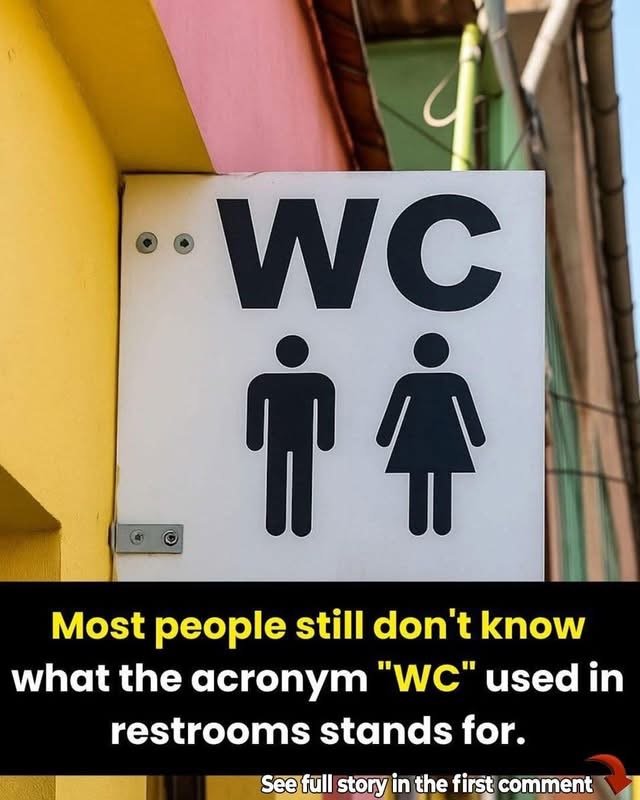
Traveling internationally often introduces people to unfamiliar words for everyday places, and public washrooms are a perfect example. Around the world, facilities used for personal hygiene are labeled in many different ways depending on local language and culture. In the United States, signs commonly say “restroom” or “bathroom,” while people in the United Kingdom may use terms like “loo,” “lavatory,” or simply “toilet.” In many airports, hotels, and public buildings across Europe and other regions, however, visitors frequently encounter the abbreviation “WC,” which can seem confusing at first glance.
The letters “WC” stand for “water closet,” a term that dates back to the 19th century during the early development of indoor plumbing systems. At that time, homes often separated bathing spaces from toilet areas, and the water closet referred specifically to a small enclosed room containing a flushable toilet. Before modern plumbing became widespread, sanitation methods were far less convenient, and water often had to be carried manually for washing and cleaning. The introduction of dedicated toilet rooms connected to running water represented a major improvement in comfort, cleanliness, and household design.
As plumbing systems advanced and modern sanitation became more common, the phrase “water closet” gradually remained part of everyday language in many parts of the world. Even today, the abbreviation continues to appear on signs in train stations, airports, hotels, and public facilities internationally. While most people now recognize “WC” simply as a symbol for a toilet or restroom, many are unaware of its historical background and connection to the evolution of indoor sanitation. The continued use of the term reflects how older expressions can survive long after their original context has changed.
Understanding these different terms can make travel easier and more comfortable, especially when navigating unfamiliar environments abroad. Although the names vary from country to country, the purpose remains the same: providing a clean, private space for personal hygiene. Small details like restroom signs may seem ordinary, but they also offer a fascinating glimpse into cultural habits, language evolution, and the history of modern convenience.