The Reckoning Has Begun: Whistleblowers, Flight Logs, and a Sudden UK Exit – The Full Story of Ellen DeGeneres’ Alleged Downfall
In the polished world of daytime television, where every segment ends with laughter and a call to kindness, a storm had been brewing for years.
Ellen DeGeneres sat at the center of it all — the queen of feel-good television, the billionaire with the infectious dance moves and the signature “be kind” sign-off.
But according to two women who once moved in her orbit, the image millions adored was hiding something much darker.
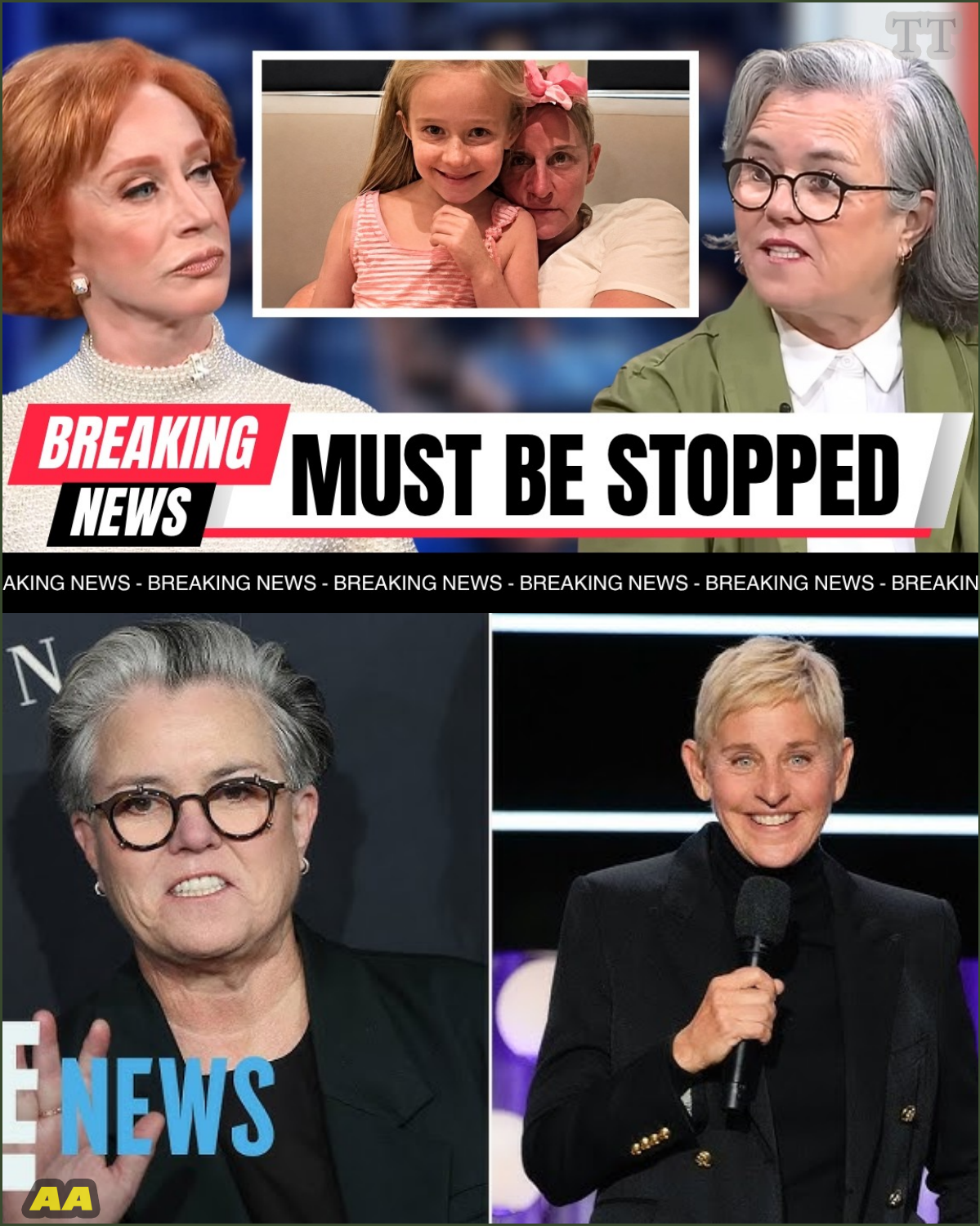
Rosie O’Donnell and Kathy Griffin, both battle-hardened veterans of the comedy scene, say they stayed silent long enough.
Now they are speaking out, connecting dots that stretch from backstage bullying to whispers of Jeffrey Epstein’s island.
The tension between these women didn’t start yesterday.

In the late 1980s and early 1990s, Rosie and Ellen were part of a small, tight-knit group of female comedians navigating an industry that was often hostile to women and especially unforgiving to those living authentically.
Rosie has publicly recounted how she stood by Ellen during her groundbreaking coming-out moment, using her own platform to shield her at significant personal risk.
She invited Ellen onto her show and delivered the now-famous “Maybe I’m Lebanese” line to ease the tension.
At the time, it felt like family.
Like solidarity.
But success changed everything.
When Rosie stepped away from her talk show to focus on family, Ellen stepped into the vacuum and launched The Ellen DeGeneres Show in 2003.
What followed, Rosie claims, was a calculated erasure.
Years later, when Larry King asked Ellen about Rosie, she reportedly replied that she didn’t really know her and that they weren’t close.
Rosie, watching at home, felt the betrayal like a knife.
The woman she had risked her career to protect had publicly distanced herself the moment it became convenient.
Kathy Griffin’s clashes with Ellen ran even hotter.
Griffin, never one to bite her tongue, says Ellen used her massive platform to label her “mean” in a monologue years ago.
Their relationship reportedly reached a boiling point with screaming phone calls and long-standing grudges.
Griffin detailed some of this in her 2016 book, only to face what she described as furious pushback.
Margaret Cho, another comedian who opened for Ellen in the 1980s, has echoed similar sentiments — claiming Ellen treated her coldly on her own show and even cut a complimentary segment featuring praise from David Bowie.
These stories of professional jealousy and erased histories might have remained Hollywood gossip if not for something far more sinister.
As the toxic workplace allegations against Ellen’s show gained traction — stories of a fear-based environment where staff walked on eggshells and “be kind” felt like a cruel joke — Rosie and Kathy began connecting deeper dots.
They point to long-circulating blind items on sites like Crazy Days and Nights that painted a disturbing picture of elite gatherings, private islands, and powerful figures.
At the time, many dismissed them as conspiracy fodder.
Then Jeffrey Epstein was arrested, died in custody under suspicious circumstances, and flight logs began leaking.
Suddenly, those old blind items looked less like fiction.
Rosie and Kathy allege that Ellen’s name has surfaced in connection with Epstein’s circle, including references to the Lolita Express and activities on Little St.
James.
While fact-checkers note that her name appears peripherally in broader Epstein documents (often in articles or tweets sent to him), the two comedians insist the full story has been suppressed.
They claim the “nice” persona was the perfect cover — a daytime shield that made any criticism sound like bitter jealousy.
The timing of Ellen’s reported move to the UK raised even more eyebrows.
As the workplace scandal intensified and whistleblowers like Sasha Riley began sharing stories, Ellen and Portia de Rossi reportedly packed up for England.
The official narrative?
Disillusionment with America’s political climate.
Rosie wasn’t buying it.
She publicly noted that Ellen had never been particularly vocal about politics before.
The move, Rosie suggested, looked more like someone putting an ocean between herself and looming accountability.
Sasha Riley, a retired Army sergeant, has emerged as one of the most explosive voices.
He alleges he was trafficked as a child in networks involving high-profile figures and claims his adoptive father piloted for Epstein.
His accounts of hidden farms, elite parties, and unimaginable acts have gone viral despite mainstream hesitation.
Rosie threw her platform behind him, calling him a survivor and urging people to listen.
When Kathy Griffin attempted to host him for a full podcast interview to name names, she says the pressure became overwhelming.
Legal threats, investigations, and warnings forced her to cancel at the last minute.
The message, she implied, was crystal clear: some truths are still too dangerous to broadcast.
The pattern feels eerily familiar to those who have followed Epstein’s web.
Power protects power.
Influence buys silence.
And those who dare speak face career destruction, legal warfare, or worse.
Rosie and Kathy say they experienced versions of this firsthand — blacklisting, public dismissals, and the quiet realization that challenging certain Hollywood sacred cows comes with consequences.
Ellen’s fall from grace had already been steep.
The 2020 toxic workplace scandal, fueled by former employees describing a culture of fear, favoritism, and meanness, effectively ended her daytime reign.
Ratings tanked.
Brands distanced themselves.
The empire built on kindness appeared hollow.
But Rosie and Kathy suggest that was only the surface layer.
The Epstein connections, if substantiated further, could rewrite the entire narrative of who Ellen really was behind the curtain.
For years, the public bought the brand — the dancing, the giveaways, the heartfelt confessions.
Now, the women who once orbited her inner circle are forcing a reckoning.
They argue that Ellen’s rise involved stepping on necks, erasing allies, and allegedly moving in circles that most people could never imagine.
The “be kind” mantra, they claim, was marketing.
The reality was control, protection, and survival at any cost.
As more documents surface and more voices emerge, the suspense builds.
Will additional flight logs surface with clearer connections?
Will other insiders find the courage to speak?
Or will the machinery of influence once again bury the story under threats and silence?
Ellen’s reported relocation to the English countryside feels, to her critics, like the move of someone buying time.
Rosie and Kathy, battle-scarred and unapologetic, show no signs of backing down.

Their alliance, forged in shared disillusionment, has become a thorn in the side of a narrative that once seemed untouchable.
What began as personal betrayals — erased histories, public snubs, heated confrontations — has evolved into something larger: a challenge to the systems that protect the powerful while silencing survivors and whistleblowers.
The public is watching.
The internet never forgets.
And in an era where transparency is demanded more than ever, the carefully constructed image of kindness may finally be cracking beyond repair.
The final chapter of this Hollywood saga is still being written, but one thing is clear: the women who refused to stay silent are determined to make sure the truth, however uncomfortable, finally sees the light of day.