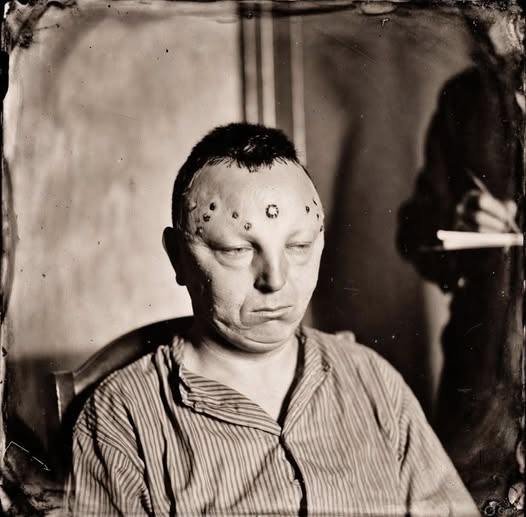
In the mid-20th century, homosexuality was still seen by many as a mental illness. For people like James Peterson, this stigma led to one of the most horrendous forms of medical treatment ever devised: the lobotomy. In 1948, James Peterson, a vibrant, artistic, and loving man, found himself subjected to a procedure that was meant to “correct” his sexuality. What followed was a loss of everything that made him who he was—his passions, his talents, and even his ability to express emotions. His story is not just one of personal tragedy but a stark reminder of how medical practices were once used as tools of oppression against marginalized communities. James Peterson’s case is a symbol of the horrors that LGBTQ individuals faced, and it serves as a powerful testament to the resilience of those who fought for their rights.
The History of Lobotomies: A “Cure” for Deviancy
To understand the gravity of James Peterson’s situation, it’s important to first look at the history of lobotomies and why they were used in the first place. A lobotomy is a type of neurosurgery where parts of the brain’s prefrontal lobe are severed or damaged. The procedure was initially developed in the 1930s by Portuguese neurologist António Egas Moniz, who believed that the process could be used to treat a variety of psychiatric conditions, including depression, schizophrenia, and anxiety. The idea was that by disconnecting parts of the brain, particularly the areas thought to control emotion and behavior, patients would become calmer and more manageable.
No photo description available.
However, the procedure soon became a tool for punishing those who deviated from the norms of society, including LGBTQ individuals. Homosexuality was, at the time, considered a mental illness or a form of sexual perversion. Those who were deemed “deviants” by society, such as James, were often subjected to these barbaric treatments in an attempt to forcefully “cure” them of their sexual orientation.
James Peterson’s case was not isolated. Across the United States and around the world, thousands of LGBTQ individuals were subjected to lobotomies, electric shock therapy, and other cruel treatments in the name of “medical care.” These so-called “treatments” were used to erase their identities, forcing them to fit into a narrow view of what was considered “normal.”
James Peterson: A Loving Man with a Passion for Life
James Peterson was 28 years old in 1948 when his life was irrevocably changed by the actions of his parents and a system that viewed him as a threat simply for loving another man. Before the traumatic event that would alter his life forever, James was known for his vibrancy and creativity. He was an artist who enjoyed painting and reading poetry. He was passionate about life, had a deep love for literature, and had a loving relationship with his partner. James had dreams, hopes, and desires, just like anyone else. However, his love for another man was deemed an illness by the societal norms of the time.
When his parents discovered that James was in a relationship with another man, they took drastic action. They had him committed to an asylum, where the diagnosis was swift and damning: “sexual perversion.” This diagnosis would lead to the recommendation of a transorbital lobotomy—also known as the “ice-pick” lobotomy. The procedure involved inserting an ice pick through the eye sockets, behind the eyes, and into the brain, where it would sever connections in the frontal lobe. The entire procedure was carried out in a matter of minutes, and in James’s case, it was done under the guise of “curing” his sexuality.
James’s parents, believing that they were doing the right thing, authorized the procedure. The doctor who performed the lobotomy assured them that their son’s “perversion” had been corrected. What they received in return, however, was not their son, but a hollowed-out shell of the person he once was.
The Lobotomy: The Destruction of a Personality
Two hours after the procedure, a tintype photograph was taken of James Peterson. The image, which is now one of the most haunting remnants of a barbaric practice, shows James with ice pick entry wounds above both eyes. His face is vacant, devoid of the expression that once marked him as an intelligent, passionate, and compassionate individual. The eyes that once sparkled with life are now dull, and the smile that once lit up a room is gone. His body may have remained alive, but the person he was had been destroyed.
James Peterson’s lobotomy was, in essence, a personality murder. His capacity to think, feel, and express himself was taken from him in a procedure that lasted just 15 minutes. The doctor who performed the lobotomy later reported that the procedure was a success, noting that James no longer exhibited “deviant sexual interests.” What they didn’t mention was that James was no longer capable of doing anything. His creativity, his love, his passion—everything that had made him James—was wiped out in an instant.
The aftermath of the lobotomy was even more devastating. James no longer had any desires, preferences, or motivations. He stopped painting. He stopped reading poetry. He stopped laughing at jokes. He became a shell of the person he once was, following simple routines in a group home for lobotomy patients. For the next 46 years of his life, James Peterson would live in a world of complete emotional numbness, never again experiencing the fullness of life that he once had.
A Lifetime of Loss: James’s Partner’s Heartbreak
James Peterson’s partner, who had loved him deeply and had shared in his passion for life and art, was left devastated by the lobotomy. James’s partner kept the photograph and medical records, documenting the horror that had been inflicted upon the man he loved. After James’s death in 1994, his partner donated these materials to LGBTQ archives, alongside a heart-wrenching note that read:
“This is James before lobotomy destroyed him for loving me. He was 28, brilliant, kind, artistic. His parents called our love perversion. Asylum called it disease. Treatment was ice picks through eyes. James survived 46 years as a vegetable. I survived 46 years remembering who he was. They called it medical treatment. It was murder. They called him cured. He was dead. Body kept functioning. James died in 1948. That’s what they did to us for loving.”
The agony of losing James was compounded by the knowledge that James’s parents, who had authorized the lobotomy, never returned to visit him after the procedure. In their eyes, they had succeeded in erasing what they viewed as their son’s “flaw”—his love for another man. But what they didn’t realize was that in attempting to “cure” their son’s homosexuality, they had destroyed everything that made him human.
James’s partner’s note is a stark reminder of the cruelty and inhumanity faced by LGBTQ individuals in the past, particularly those who dared to love outside the boundaries of societal norms. It also speaks to the resilience of those who loved them and fought for their rights, even when the world around them was blind to their humanity.
No photo description available.
The Dark History of LGBTQ Oppression in Medicine
James Peterson’s tragic story is a powerful example of the devastating lengths to which society would go to “correct” what it considered “deviance.” His lobotomy is just one instance in a long history of medical practices used to “treat” homosexuality, which was classified as a mental illness for much of the 20th century. Before the 1973 decision by the American Psychiatric Association to remove homosexuality from the Diagnostic and Statistical Manual of Mental Disorders (DSM), LGBTQ individuals were subjected to a variety of inhumane treatments, including electric shock therapy, chemical castration, and lobotomies.
The use of lobotomies on LGBTQ individuals was not just about erasing their sexuality—it was about erasing their humanity. The medical community, in many cases, saw homosexuality as something to be cured, a disorder that needed to be eradicated. As a result, countless lives were ruined, as individuals like James Peterson were subjected to brutal and unscientific procedures that left them physically and mentally broken.
The Fight for LGBTQ Rights and the Legacy of James Peterson
James Peterson’s story is a reminder of the violence and oppression that LGBTQ individuals have faced throughout history. It is a powerful testament to the resilience of those who fought for their rights and for the recognition of their humanity. While James’s story is tragic, it is not unique. There were many others who suffered in silence, their stories lost to time. However, thanks to the tireless efforts of LGBTQ activists and advocates, the world has made significant strides toward equality and acceptance.
James Peterson’s legacy, as preserved by his partner, is a call to never forget the injustices that were done in the name of “treatment.” His story serves as a reminder that we must continue to fight for the rights of LGBTQ individuals, to ensure that no one ever again has to suffer the horrors that James did.
As we look back on James Peterson’s life and the history of medical practices used to oppress LGBTQ people, we are reminded of the importance of compassion, respect, and acceptance. We must never forget the lessons of the past, and we must continue to work toward a world where love is never seen as something that needs to be “fixed.”