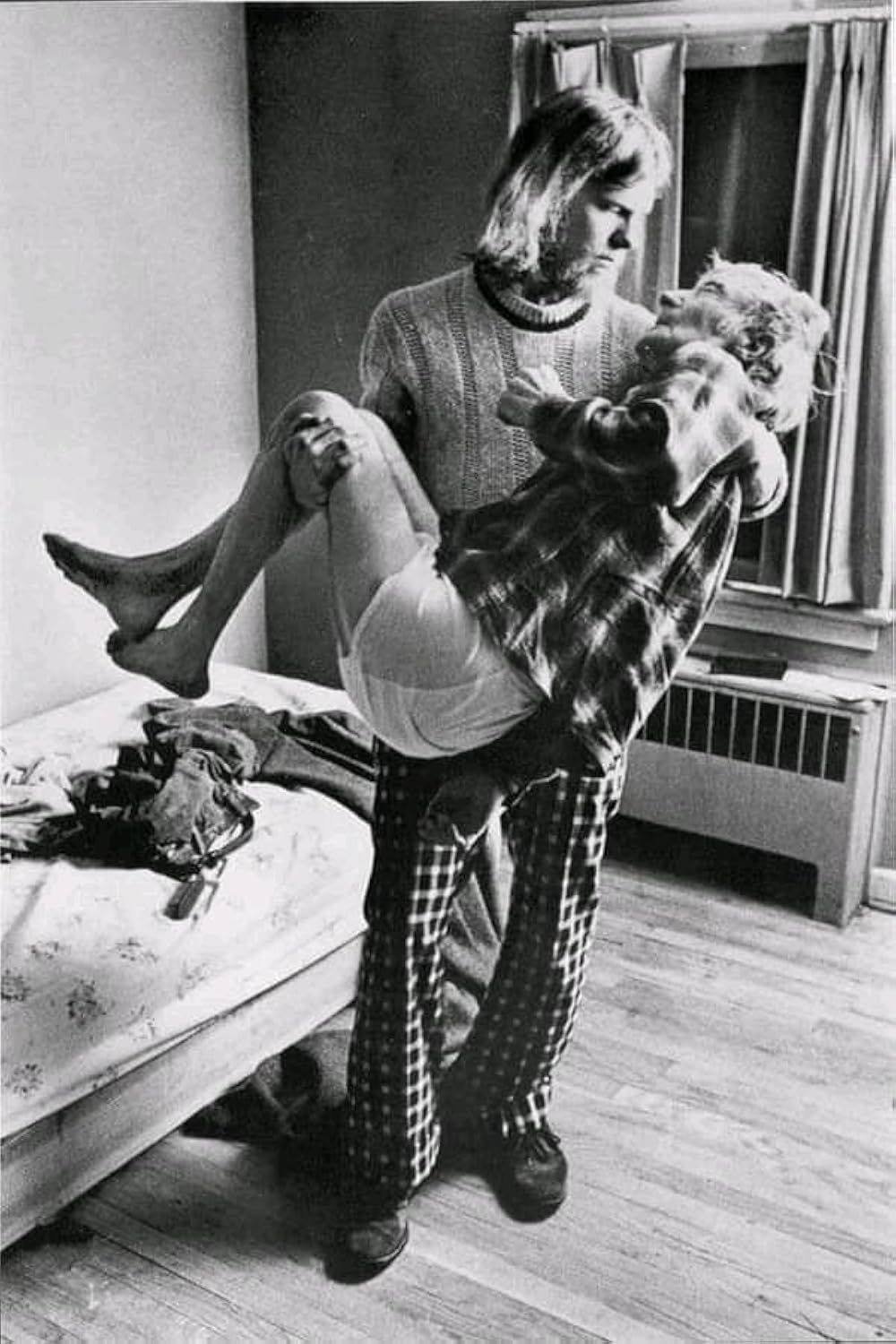
In 1974, a young man named Dan Jury made a decision that would alter the course of his life and, unknowingly, contribute to a profound shift in how America viewed elder care. At just 23 years old, Dan took his 81-year-old grandfather, Frank Tugend, out of a nursing home and moved him into his own apartment, choosing to care for him full-time. This decision, made from a place of love and devotion, would not only change Dan’s life but also become a turning point in the hospice movement, a movement that would challenge the very foundation of institutional care for the elderly.
What started as a personal commitment quickly became a cultural milestone. Dan’s intimate photographs of their life together were eventually published in the 1978 book Gramp, co-authored with his brother, Mark. This visual memoir, capturing the raw and unfiltered moments of their three years together, was not just a tribute to a grandfather and his grandson—it was a call to rethink the way society cared for its aging population. The book sold over 100,000 copies and played a pivotal role in popularizing the idea of home care for the elderly, influencing the rise of the hospice movement in America.

In an era when institutional care for the elderly was the norm, Dan’s decision to bring his grandfather home was revolutionary. He didn’t just visit Frank on weekends or holidays—Dan devoted himself to Frank’s care every single day, taking on the role of a full-time caregiver. He bathed Frank, managed his medications, provided comfort during moments of confusion, and stood by his side through the final years of Frank’s life. While many of Dan’s peers were focused on building careers and relationships, Dan chose a path that was often seen as a sacrifice—a waste of youth, according to some. Yet, Dan would later reflect that those three years spent with Frank taught him more about life, love, and legacy than any job or relationship ever could.
a young man caring for his grandfather, 1974 : r/HistoricalCapsule
Frank’s Story: A Survivor’s Journey

To fully understand the significance of Dan’s decision, one must first learn about Frank Tugend. A Ukrainian Jewish immigrant, Frank had endured the hardships of the Great Depression, fought in World War II, and lived through the struggles of immigrant life in America. He was a man who knew the value of hard work, resilience, and family. Frank’s life story was one of perseverance—one that had weathered the storm of adversity and come out stronger on the other side.
But in his final years, Frank was no longer the strong, independent man he once was. He was frail, often confused, and in need of constant care. Yet, even in his vulnerability, Frank remained a teacher. His wisdom, forged through years of hardship, was evident in every interaction he had with Dan. The lessons Frank imparted to his grandson were not just about surviving life’s challenges—they were about embracing mortality, finding strength in vulnerability, and understanding the grace that comes with accepting help.
The bond between Dan and Frank deepened over time. As Frank’s health declined, Dan’s devotion to his grandfather became a reflection of his love for him. The care he provided wasn’t just about physical assistance—it was about emotional support, companionship, and showing up every day, no matter how difficult the task. Through Frank’s final years, Dan learned that caregiving wasn’t about self-sacrifice. It was about love and respect. It was an exchange, a beautiful exchange, that allowed both Frank and Dan to experience the depth of their relationship in ways they never had before.
Changing the Way America Views Elder Care
Dan’s choice to care for Frank at home was a radical departure from the standard model of elder care in the 1970s. At the time, nursing homes were the primary form of institutional care for the elderly, and many families viewed placing their loved ones in a nursing home as the only option. But Dan’s story, as captured in Gramp, painted a different picture. It showed that home care, surrounded by loved ones, could be just as, if not more, fulfilling than the clinical, often sterile environments of nursing homes.
The photos in Gramp were not merely pictures of a grandfather and his grandson—they were a visual representation of a shift in societal attitudes toward aging and death. In these images, the tender moments between Dan and Frank—the shared laughter, the quiet conversations, the physical care—demonstrated that aging, and even dying, could be a dignified and beautiful process when surrounded by family and love. Dan’s photographs captured the essence of caregiving not as a burden, but as a profound act of compassion and connection.
The hospice movement, which advocates for terminally ill patients to receive care at home, was gaining ground during this time, and Dan’s story helped bring it into the mainstream. By choosing to care for his grandfather at home, Dan was part of a larger movement that was challenging the conventional wisdom of institutional care. His decision to show that families could—and should—be involved in the care of their aging loved ones paved the way for a more humane approach to elder care.
a young man caring for his grandfather, 1974 : r/HistoricalCapsule
The Power of Family Caregiving
One of the most striking lessons that Gramp teaches is that caregiving is not a sacrifice, but a gift. It is a gift of love, of learning, and of connection. Dan’s experience with Frank showed that caregiving doesn’t take away from life—it adds to it. It deepens relationships, teaches patience, and brings families closer together.
The idea that caregiving is a burden is a misconception that has been ingrained in society. Many view caregiving as something that takes away from personal time, from career goals, or from the things that “really matter.” But Dan’s story shows that caregiving is not an interruption of life—it is an integral part of life. Through his time with Frank, Dan discovered that caregiving provides an opportunity for growth and personal transformation.
By providing care for Frank at home, Dan also created an environment where his grandfather could feel dignity and respect in his final years. Instead of being isolated in a nursing home, Frank was surrounded by the people who loved him, in the comfort of a space he knew and cherished. This experience revealed to Dan that everyone, regardless of age or illness, deserves to be treated with the same compassion, respect, and love.
Lessons Learned: The Value of Mortality

Through the course of his caregiving journey, Dan learned many valuable lessons from Frank. One of the most profound lessons was about mortality itself. In caring for Frank, Dan was forced to confront the inevitability of death—not in a clinical or detached way, but in a deeply personal, emotional way. He saw firsthand that death is not something to be feared, but something that is a natural part of life’s cycle. It’s something to be accepted with grace and dignity.
Frank’s aging process became a mirror for Dan’s own understanding of life. As he cared for Frank, Dan began to realize the importance of embracing life’s challenges, of finding meaning in every moment, and of cherishing every relationship. The bond between Dan and Frank was a reminder that love is not something to be taken for granted—it’s something to be nurtured and celebrated, even in the face of death.
Medical Futility Blog: 2015-08-30
A Lasting Impact: Changing the Narrative of Elder Care
Dan and Frank’s story continues to impact the way we think about elder care today. The legacy of Gramp lives on, not only in the photographs and the book but in the thousands of families who have chosen to care for their loved ones at home, surrounded by the warmth of family and love.
The hospice movement, which advocates for home-based care for the terminally ill, has grown significantly since the 1970s, thanks in part to the cultural shift that Dan’s story helped inspire. Today, more and more families are choosing home care over institutional care, opting for a model that prioritizes comfort, dignity, and emotional connection. Dan’s decision to care for Frank has had a lasting impact on the way we view aging and death, showing that these final years are not something to be feared or avoided but something to be embraced with love and grace.
The True Meaning of Family Responsibility
Dan’s decision to care for his grandfather was not just an act of love—it was a revolution. It challenged the cultural norms of the time and redefined what it meant to care for an elderly loved one. It showed that caregiving is not a sacrifice but an opportunity to deepen our connections, learn valuable life lessons, and provide our loved ones with the dignity they deserve in their final years.
Dan’s story is a reminder that family responsibility is not about burden—it’s about love, respect, and the gift of being there for those we care about. The story of Dan and Frank Tugend continues to inspire families across the world to choose home care and to embrace the responsibility of caregiving as a profound act of love and connection.