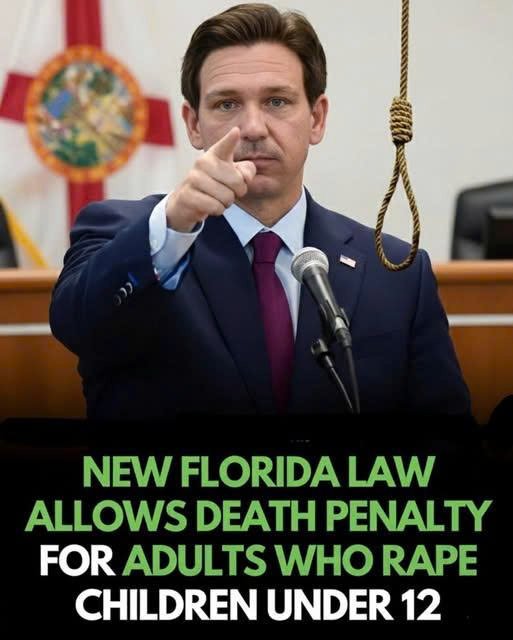
Florida has positioned itself at the epicenter of a legal and moral storm by passing a law that permits capital punishment for child sexual assault. This legislation, targeting adults who abuse children under twelve, is among the toughest of its kind in the United States. It springs from a well of public outrage over crimes deemed uniquely devastating, but it steps into a constitutional battleground, setting the stage for a high-stakes clash between state authority and federal judicial precedent.
Proponents of the law describe it as an act of moral clarity. They argue that the profound, lifelong psychological destruction caused by child sexual abuse justifies a penalty equivalent to that for murder. For them, the law is a declaration that society will no longer tolerate these crimes at any level and will respond with its most severe tool. Governor DeSantis and supporting lawmakers frame it as the ultimate protective measure for the most vulnerable, a deterrent they hope will resonate powerfully with potential offenders. The message is intended to be absolute and unforgiving.
Yet, the path to enforcement is legally obstructed. The U.S. Supreme Court’s ruling in Kennedy v. Louisiana currently prohibits the execution of individuals for rape where the victim survives. Florida’s law is a direct rebuke of this ruling. This has led many observers to conclude the legislation is fundamentally a strategic challenge, designed to create a test case. The goal, they suggest, is to force the Supreme Court to reconsider its earlier decision, potentially leveraging the Court’s current composition to shift constitutional interpretation on cruel and unusual punishment.
Beyond the constitutional showdown, victim advocates and legal experts voice practical fears. They worry the law could backfire, harming the very children it aims to protect. The prospect of a capital trial could make victims reluctant to testify, families hesitant to report, and prosecutors less likely to secure convictions. The intense scrutiny and extended proceedings of a death penalty case could also retraumatize young victims. Furthermore, by focusing on extreme punishment after the fact, critics argue resources might be diverted from prevention, intervention, and support services that could stop abuse before it occurs.
The law’s future now lies with the courts. Immediate injunctions are anticipated, freezing its application. Its legacy, however, is already being written in the national dialogue it has ignited. It forces a difficult conversation about proportionality, deterrence, and the true meaning of justice for survivors. Whether it survives judicial review or not, Florida’s law underscores a deep-seated demand for aggressive action against child predators and the complex, often conflicting, ways a society seeks to achieve safety and retribution.