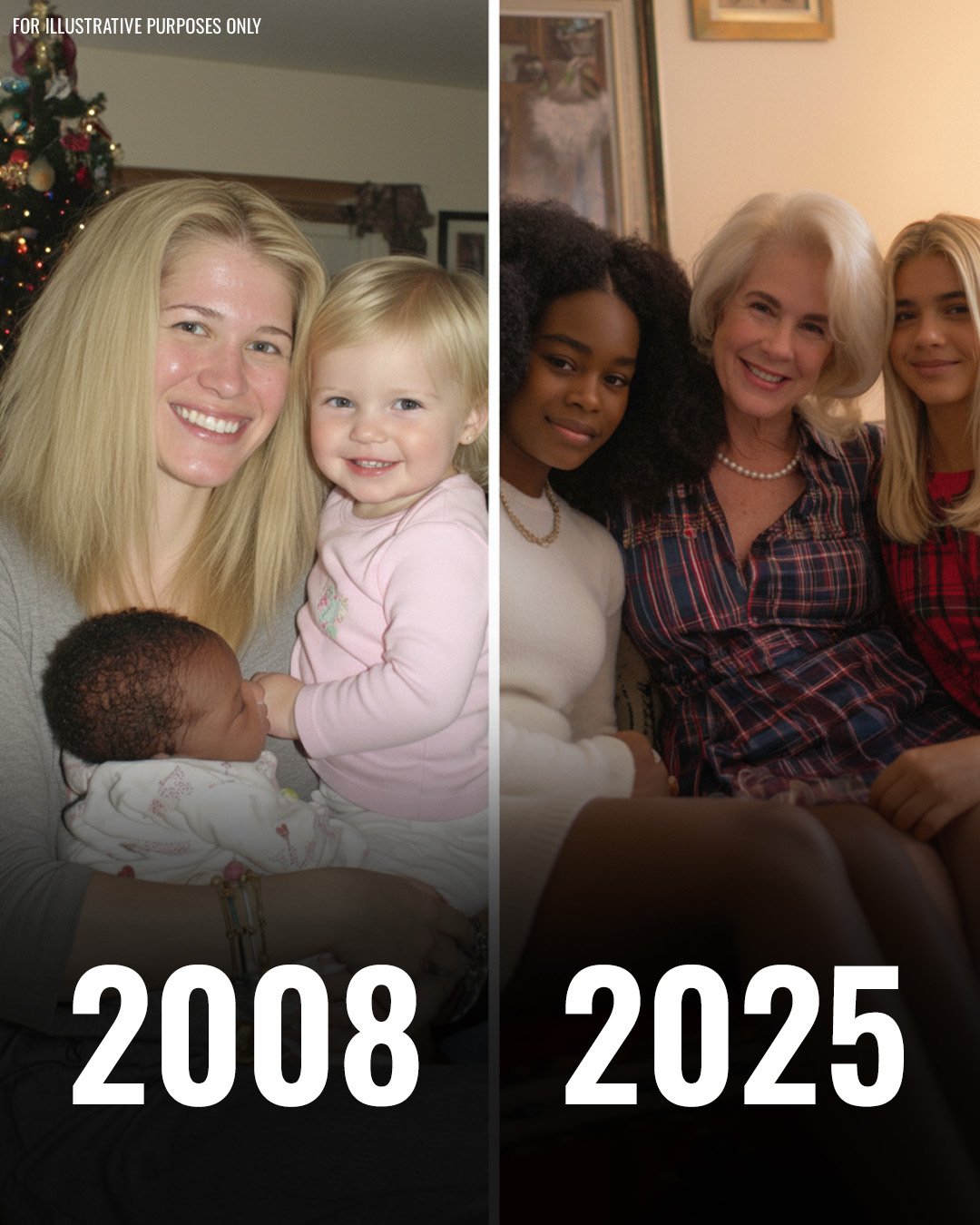
Family is built on stories. The story we told ours was one of chosen love and miraculous addition. After the soul-crushing journey of infertility and loss, the birth of my daughter Stephanie felt like a divine gift. Remembering a desperate promise made in my darkest hour, we adopted her sister, Ruth. Our narrative was beautiful: love expanded, a family made whole. For years, I believed that story was enough. I never imagined that the very foundation of our tale would one day be used to shatter my daughter’s heart.
The girls, though raised with identical love, were fundamentally different people. Stephanie was my extroverted, confident firecracker. Ruth, my thoughtful, sensitive observer. I navigated motherhood by trying to pour equal amounts of love into two very different vessels, not realizing that equity isn’t sameness. The quiet rivalry that simmered between them wasn’t just about clothes or attention; it was a deep-seated competition for identity within our family story. Ruth, always so attuned to subtleties, was perhaps sensing a nuance I’d missed.
The crisis exploded not with a shout, but with a quiet, devastating sentence on Ruth’s prom night. She looked at me and said she was leaving, because Stephanie had revealed the “truth.” My teenage daughter, in a moment of anger, had twisted the sacred origin of our family into a weapon. She told Ruth she was not first a beloved child, but a fulfilled obligation—a charity case born from a bargain with God. The betrayal was layered: sister against sister, and my private moment of despair weaponized as proof of conditional love.
Facing Ruth, I didn’t deny the prayer. Instead, I shared the context of that raw, grief-stricken night for the first time. I explained that the promise was a signpost, not the destination. “My love for Stephanie showed me how much love I had to give,” I told her. “The promise simply showed me where you were.” But when a heart is broken, logic is a poor bandage. She left, forcing our family into a painful stillness where we had to confront the fractures we’d ignored.
Her return days later was a testament to the real love that existed beneath the broken story. Standing on the porch, she articulated the core need every child has: “I don’t want to be your promise. I just want to be your daughter.” In that moment, our family’s story had to be rewritten, not around a dramatic origin, but around the daily, active choice of belonging. It taught me that love, while the essential ingredient, must be accompanied by transparency and the constant, gentle reassurance that a child’s place in a family is never a consequence, but a cause for love itself. Healing begins when we listen to the hurts our beautiful stories might inadvertently hide.