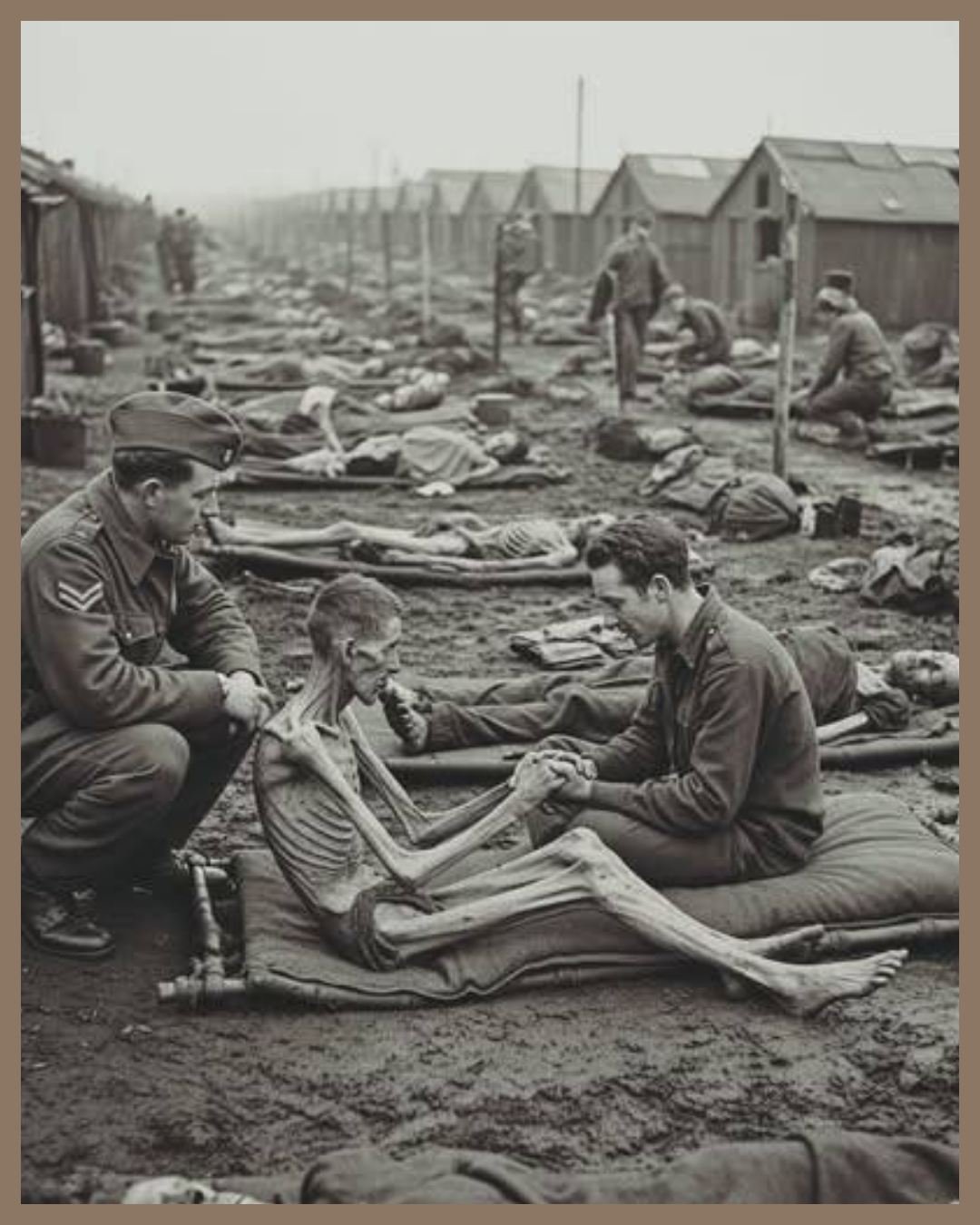
The final days of World War II were a chaotic unraveling, revealing nightmares that defied comprehension. On April 18, 1945, U.S. soldiers liberating a makeshift camp were met with a scene of apocalyptic suffering. Among the countless bodies and broken souls, a small, focused drama unfolded. A Dutch prisoner, Pieter, was hunched over another inmate who was succumbing to starvation and exposure. Pieter’s own body was ravaged, but he performed a simple, deliberate ritual: he held the man’s hand, his thumb caressing it with a gentle, rhythmic patience.
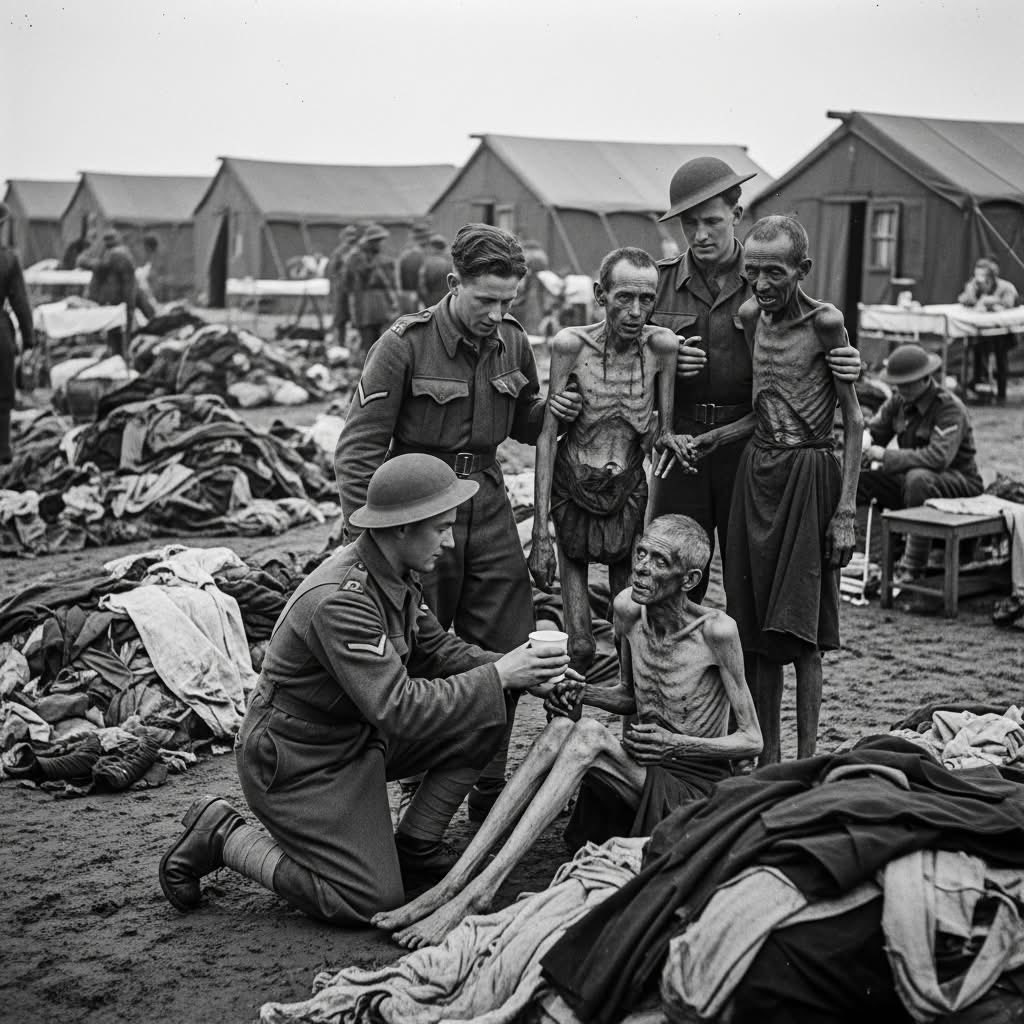
This was not a passive gesture. In an environment designed to strip away individuality, compassion, and even the semblance of human bonds, Pieter’s act was one of active defiance. He was asserting a fundamental truth: “We are still men. We still care for one another.” The dying man, beyond words, was being granted the profound comfort of not being abandoned. Their shared touch was a sanctuary, a tiny zone of peace carved out from an ocean of violence.
An American medic, moving through the hellscape, stopped at this scene. Overwhelmed by the scale of need, he could have moved on. Instead, he knelt. In tending to them, he validated their humanity. He saw not just two more victims, but two individuals whose connection commanded respect. The medic’s compassion met Pieter’s, creating a chain of empathy that bridged the gap between liberator and liberated, between strength and frailty.
The legacy of that April day is not recorded in battle maps or political treaties. It is etched in the memory of that steadfast handhold. It teaches that in the absolute nadir of human experience, our capacity for kindness is not extinguished—it becomes our most essential lifeline. The story of Pieter and the medic challenges us to recognize that heroism often wears a quiet face. It asks us to remember that the fight for humanity is won not only on battlefields, but in the choice, however small, to offer comfort and to acknowledge the light in another’s eyes, even when the world has gone dark.