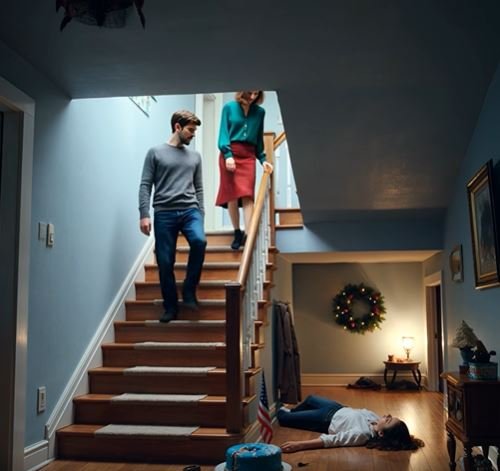
My name is India. For twenty-eight years, I lived in a house where love was conditional and truth was negotiable. My younger brother’s cruelty was reframed as my sensitivity. My injuries were my clumsiness. My pleas for help were attention-seeking. I learned to doubt my own pain. The day he pushed me down the basement stairs on his sixteenth birthday, that conditioning kicked in even as I lay paralyzed. My father’s command to “walk it off” and my mother’s accusation that I was ruining the day were the familiar soundtrack to my suffering. The real injury wasn’t just my spine; it was the lifetime of being taught that my reality was wrong.
The first person to truly see me was a paramedic named Tara. While my family argued, she knelt beside me, asked what happened, and listened to my whispered “I was pushed.” She didn’t question it. She called for police backup. In that moment, a stranger’s belief became the lifeline that pulled me from the quicksand of my family’s narrative. At the hospital, telling the full truth to a detective and a doctor was terrifying, like speaking a forbidden language. But with each word, a weight lifted. The validation from the MRI scan—proof of the acute and old injuries—was the first brick in a new foundation of reality, built on fact, not family fiction.
Physical recovery was a war I fought in gyms and therapy pools, celebrating the tingling in a toe as a monumental victory. The psychological recovery was quieter but harder. In therapy, I learned words for what I’d experienced: gaslighting, scapegoating, trauma. I had to grieve the family I never had while dismantling the lies they’d installed in my mind. Letting my best friend Payton fully in, accepting her unwavering support, taught me what safe attachment felt like. Building a center for other survivors transformed my pain into purpose. It became my testament that what breaks us can also become the ground we stand on.
Today, I walk with a cane. Some days are harder than others. The relationship with my mother is a fragile, careful bridge we’re both learning to cross. I’ve made peace with the fact that some family bonds are prisons, and freedom is worth the cost. My story is not about vengeance, but about voice. For anyone trapped in a family that asks you to betray your own senses, please know this: your pain is real. Your truth matters. There are people who will believe you. Sometimes, the bravest step isn’t walking away—it’s the first time you choose to believe yourself. Healing isn’t about forgetting the fall; it’s about building a life strong enough to stand on afterward.