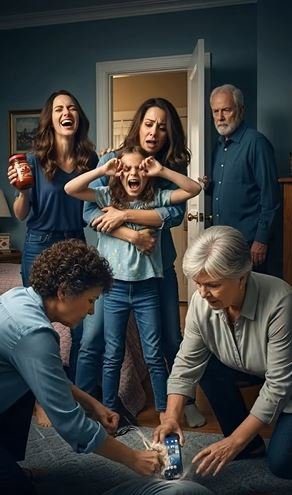
The laugh was the first thing that registered, a harsh, grating sound that didn’t belong in a child’s bedroom. Then came the scream—a raw, terrified shriek that tore through the hum of the party below. I found my sister standing over my daughter’s bed, a jar of artisanal chili paste at her feet, and a smile of pure amusement on her face. My five-year-old, Sophie, was writhing, her small hands clawing at her eyes as she sobbed that she couldn’t see. The air stung with the scent of vinegar and peppers, a smell I would forever associate with betrayal.
What followed was a swift, chilling conspiracy. My mother, upon hearing my frantic plans to call an ambulance, didn’t plead or reason. She snatched the phone from my hand and shattered it on the floor. My father then cleared the room of guests with a calm lie about a simple accident. His final act was to close the door, leaving Sophie and me in the dim room. The definitive thud of the deadbolt sliding home was the sound of my old life ending. We were prisoners, and our jailers were the people I had called Mom and Dad.
The six hours that followed were a slow-motion hell. I held my daughter at the bathroom sink, flushing her eyes until the water ran cold, her whimpers a constant, painful melody. When the lock finally clicked open the next morning, my mother stood there with a tray of pancakes, her smile a grotesque mask of normalcy. She offered forgiveness for my “accusations” and threatened to take my daughter if I spoke out. In that moment, I saw her not as a parent, but as a strategist in a war I hadn’t known I was fighting.
I walked out of that house with a terrifying clarity. The justice system offered no solace, so I would build my own. I spent months as a silent architect of ruin, hiring a investigator who uncovered the rot at my family’s core—the paid-off scandals, the looming debt, the lifelong pattern of enabling cruelty. I sued them all, not for money, but for a public reckoning. The trial was the final, brutal separation. I sat on the stand and described the lock clicking shut, and I watched the jury understand.
Now, years later, the war is over. The victory is in the quiet moments: baking cookies with Sophie, whose scars have faded, and watching my mother—a stranger now—approach my doorstep only to be told through an intercom to leave. The click of the lock that once trapped us now symbolizes our freedom. I burned the bridge to my past, and from the ashes, my daughter and I have built a fortress, safe and whole, on the other side.