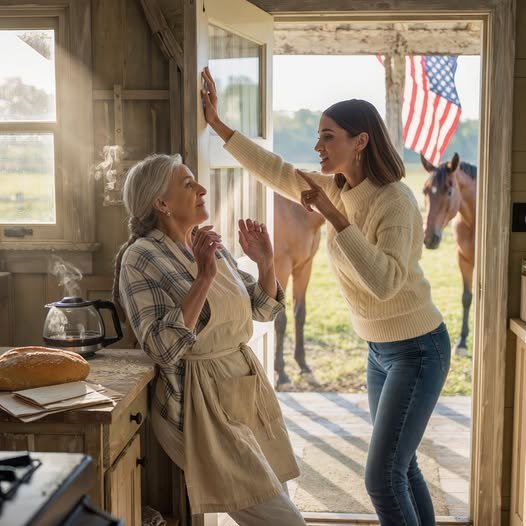
The moment my daughter cornered me in my own kitchen and coldly offered me a choice between a nursing home and the horse paddock, my entire world view shattered. The pain wasn’t just in her words, but in the calculated ice in her eyes. This was my only child, the person I had loved and supported unconditionally. Yet, in that devastating confrontation, I found a strange and powerful clarity. It was the catalyst that forced me to stop being the self-sacrificing mother and start being Sophia, a woman with a voice, a past, and a right to her own life.
For decades, my identity was solely “Alexis’s mom.” After her father left, I dedicated myself completely to her happiness, believing that was the highest form of love. I worked tirelessly, denying myself so she could have opportunities, from college to her wedding. I mistakenly equated being needed with being loved. When she married George and they came into an inheritance, I was thrilled for their future. Their idea to build an inn on my property seemed like a family venture. Trusting her implicitly, I signed the papers they put in front of me, not realizing I was signing away my legal rights to my own home.
The slow erosion of my place in the family was heartbreaking. I was gradually pushed aside, my opinions dismissed, and my presence treated as an inconvenience. The day I found the property deed in their names alone was the day the illusion finally broke. When I confronted them, the mask fell away completely, revealing a stunning sense of entitlement and disrespect. The ultimatum was simply the final, brutal confirmation that I had become a problem to be solved. But their solution became my awakening.
I didn’t choose either of her cruel options. I chose a third path: truth. I retreated to a friend’s home and contacted a lawyer, finally ready to use the documents I had hidden for thirty years—proof that her inheritance was founded on her father’s crime. The legal process to reclaim my home was not about vengeance, but about establishing a fundamental truth: I mattered. My well-being, my security, and my dignity were not negotiable. It was a terrifying but empowering step toward reclaiming my autonomy.
The outcome was a mix of justice and grace. The court returned my property, and I chose to forge a new, professional relationship with my daughter, built on legally sound contracts and, more importantly, on the hard work of family therapy. We are learning to communicate without old resentments and to love each other without possession or obligation. I have since rediscovered my own passions, from painting to sewing, building a life that is mine first. That terrible day in the kitchen now feels like a painful but necessary rebirth, teaching me that the deepest love is one that honors both the parent and the child as whole, independent people.