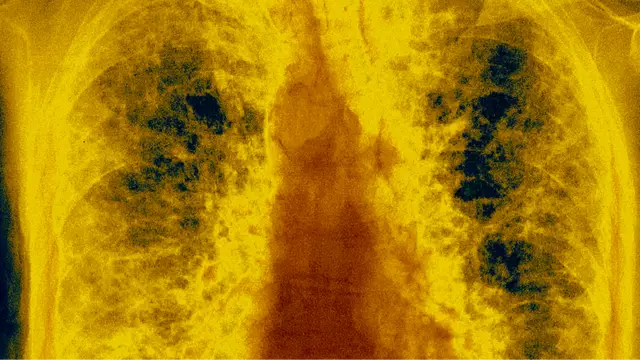
From an industrial accident to a contemporary public health concern, “popcorn lung” presents a compelling case study in chemical toxicology. Scientifically known as bronchiolitis obliterans, this condition exemplifies how a specific chemical, diacetyl, can cause irreversible damage to the delicate architecture of the human lung when inhaled, raising urgent questions about the inhalation of flavored aerosols in e-cigarettes.

The etiology of the disease is rooted in a specific incident. In the early 2000s, occupational health investigations at a microwave popcorn factory revealed that workers were developing a rare and severe lung disease. The causative agent was identified as diacetyl (2,3-butanedione), a volatile organic compound used as a flavoring agent. When heated and aerosolized, diacetyl is inhaled deep into the lungs, where it triggers an inflammatory response in the bronchioles. This leads to the proliferation of granulation tissue, effectively scarring and obstructing these critical small airways, a process that is pathologically irreversible.

The public health relevance today lies in the transfer of this chemical risk to consumer products. Diacetyl was subsequently found in the flavorings of many e-cigarettes and vaping liquids. The mechanics are analogous to the factory setting: the vaping device heats the liquid, creating an aerosol that carries diacetyl deep into the user’s respiratory system. While regulatory bodies in the EU and UK have since banned its use in e-cigarettes, its history of use and potential presence in unregulated markets underscores a significant risk.
The pathophysiology of the disease explains its clinical presentation. The scarring and narrowing of the bronchioles directly lead to the primary symptoms: a persistent dry cough and progressive shortness of breath (dyspnea), particularly upon exertion. Diagnosis is challenging, and the prognosis is poor because the scar tissue is permanent. Current medical interventions are palliative, not curative, involving bronchodilators and steroids to manage symptoms, with lung transplantation as a last resort.

For the scientific and medical community, the case of popcorn lung serves as a cautionary tale. It highlights a direct pathway from occupational chemical exposure to a consumer health risk. The increasing use of e-cigarettes among young adults, for whom the long-term health effects are not fully characterized, makes understanding this link critical. It stands as a stark reminder that the inhalation of chemically complex aerosols poses a tangible risk of severe, permanent lung damage.