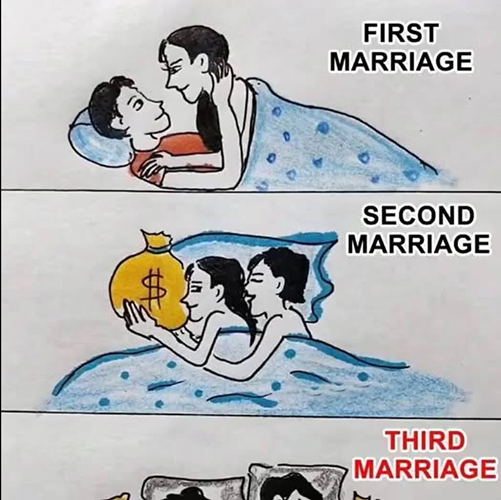
First marriages usually open with fireworks and a guest list long enough to fill a church basement. Two people step forward carrying dreams stitched together from rom-coms, family stories, and the unstoppable conviction that love will be enough. They promise to split chores, finances, and holidays perfectly, half expecting a soundtrack to swell whenever they kiss. Reality arrives later: socks left on the floor, credit-card balances, in-laws with opinions. The early years become a crash course in “adulting” together, and sometimes the homework feels heavier than the honeymoon. If the bond cracks, it often cracks under the weight of unspoken expectations: I thought you’d change, I thought you’d stay the same.
Second weddings are smaller, brighter, or skipped entirely in favor of a courthouse bench. By now the partners have seen the ending credits roll once, so they read the script more carefully. They ask direct questions about debt, children, custody schedules, and where the dog will sleep. Conversations that used to be romantic small talk—“Do you want kids someday?”—become spreadsheets and vaccination records. Love is still the star, but it shares the stage with logistics. Blending families means learning to love someone else’s tantrums, report cards, and favorite cereal. The stakes feel higher, yet the resilience is stronger; both people know they can survive loss, and that knowledge steadies their hands when they sign the license a second time.
Third marriages often feel like quiet conspiracies between two people who finally understand themselves. The ceremony might be fifteen people on a beach at sunset, or twenty minutes at city hall followed by tacos. By now the vows are less about perfect partnership and more about honest companionship: I will give you space to be you, I will ask for what I need, I will not pretend. There is less shock when illness, job loss, or aging parents appear, because life has already demonstrated its curveballs. Intimacy becomes less about fixing each other and more about witnessing each other—celebrating wrinkles, forgiving old playlists, laughing when memory falters. Autonomy is treasured; coming home is voluntary, not required.
Across all three stages, the constants remain kindness, curiosity, and the willingness to keep talking after the fight. Whether it’s the first hopeful “I do,” the second cautious “Let’s try again,” or the third grateful “I choose you today,” marriage is less a finish line than a living manuscript—edited, dog-eared, sometimes rewritten entirely. Each revision carries the margin notes of every chapter that came before, proof that love, like people, can learn new lines and still find a standing ovation.