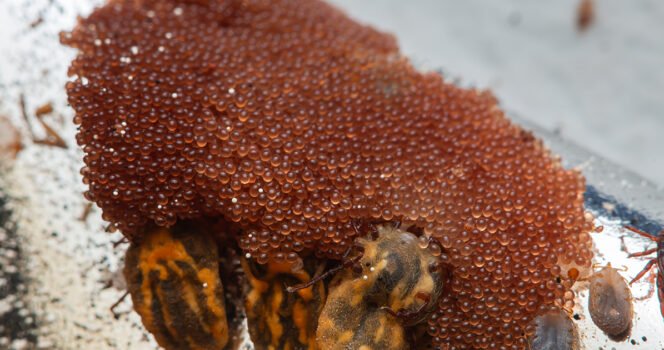
Finding a cluster of strange eggs in your backyard can be unsettling, and if they belong to ticks, it’s a sign you need to take action. Ticks are notorious for their ability to transmit diseases to humans and pets, making their presence a genuine health concern. Recognizing their eggs is the first critical step in preventing a future infestation and protecting your household.

Tick eggs are masterfully camouflaged due to their tiny size and preferred locations. Appearing as a clustered mass of miniature, poppy seed-sized spheres, they are often translucent or light brown and possess a distinctive glossy sheen. They are strategically laid by the adult female in protected, humid environments where the emerging larvae will have a high chance of survival. Prime real estate for tick eggs includes thick layers of leaf litter, the underside of low-lying vegetation, and within or around ground-level woodpiles.

The moment you suspect you’ve found tick eggs, the most important thing to do is avoid disturbing them. Instead, document your find with a photo and immediately contact a pest control specialist or your local agricultural extension office. These professionals can confirm the identification and advise on the safest, most effective eradication method, which often involves targeted treatment rather than a DIY approach.
Understanding what attracts ticks to your yard is the cornerstone of prevention. Since ticks hitch rides on wildlife, discouraging deer and small mammals is key. Remove deer-attracting plants like azaleas and hostas, and secure trash cans to avoid feeding raccoons or mice. Maintain a clean yard by frequently raking leaves and keeping grass trimmed short to eliminate the damp, shaded habitats ticks need to lay their eggs and thrive. Awareness and proactive management are your best tools in maintaining a safe outdoor environment.