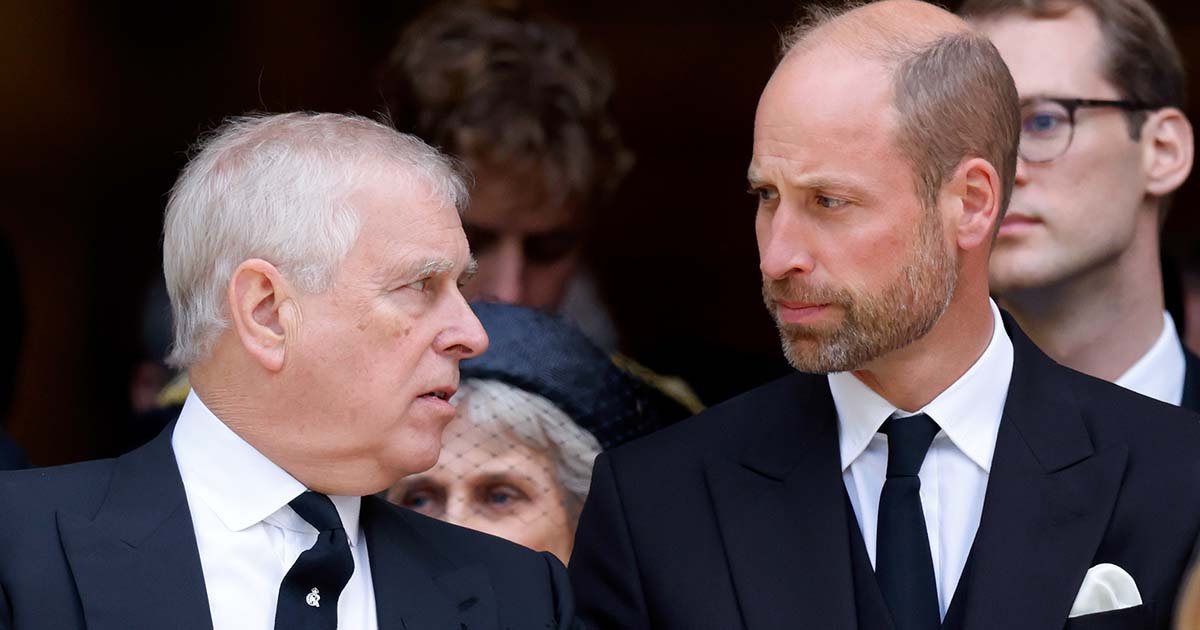
Within the private walls of the royal residences, a significant reordering of family ties is taking place, driven by the firm hand of the future king. The fallout from Prince Andrew’s connection to the Jeffrey Epstein scandal has created a deep rift, with Prince William taking a definitive stand that is reshaping the very structure of the modern monarchy. The result is a new era where personal conduct has direct consequences on one’s place within the royal fold, signaling an end to the era of indefinite second chances.
Prince Andrew’s statement, released through the royal website, made it clear that his decision to give up his titles was made in discussion with his “immediate and wider family.” This phrasing underscores that the pressure was a collective, family-driven effort, with Prince William playing a central role. Experts suggest that William was not merely a participant but a driving force, fundamentally dissatisfied with the lingering shadow his uncle cast over the institution and determined to remove it.
This has led to a stark new reality for Prince Andrew. Reports indicate that William’s plan extends beyond the current situation, with intentions to formally ban his uncle from both public and private royal events, including his future coronation, once he becomes king. This would represent the most severe form of exile within the family, a move that is both symbolic and practical in its effort to cleanse the royal brand. The message is unambiguous: there is no path back for Andrew.
Commentators like Hilary Fordwich describe this as the “zero-tolerance blueprint” of Prince William and Princess Catherine. This approach is already transforming family dynamics, enforcing a level of discipline intended to protect the monarchy’s future. By taking this hardline stance, William is asserting his vision for a streamlined, scandal-free royal family. He is establishing himself as a monarch who will prioritize the health of the institution over traditional familial leniency, ensuring that those who remain in the inner circle are there solely because they bolster, rather than threaten, the Crown’s reputation.