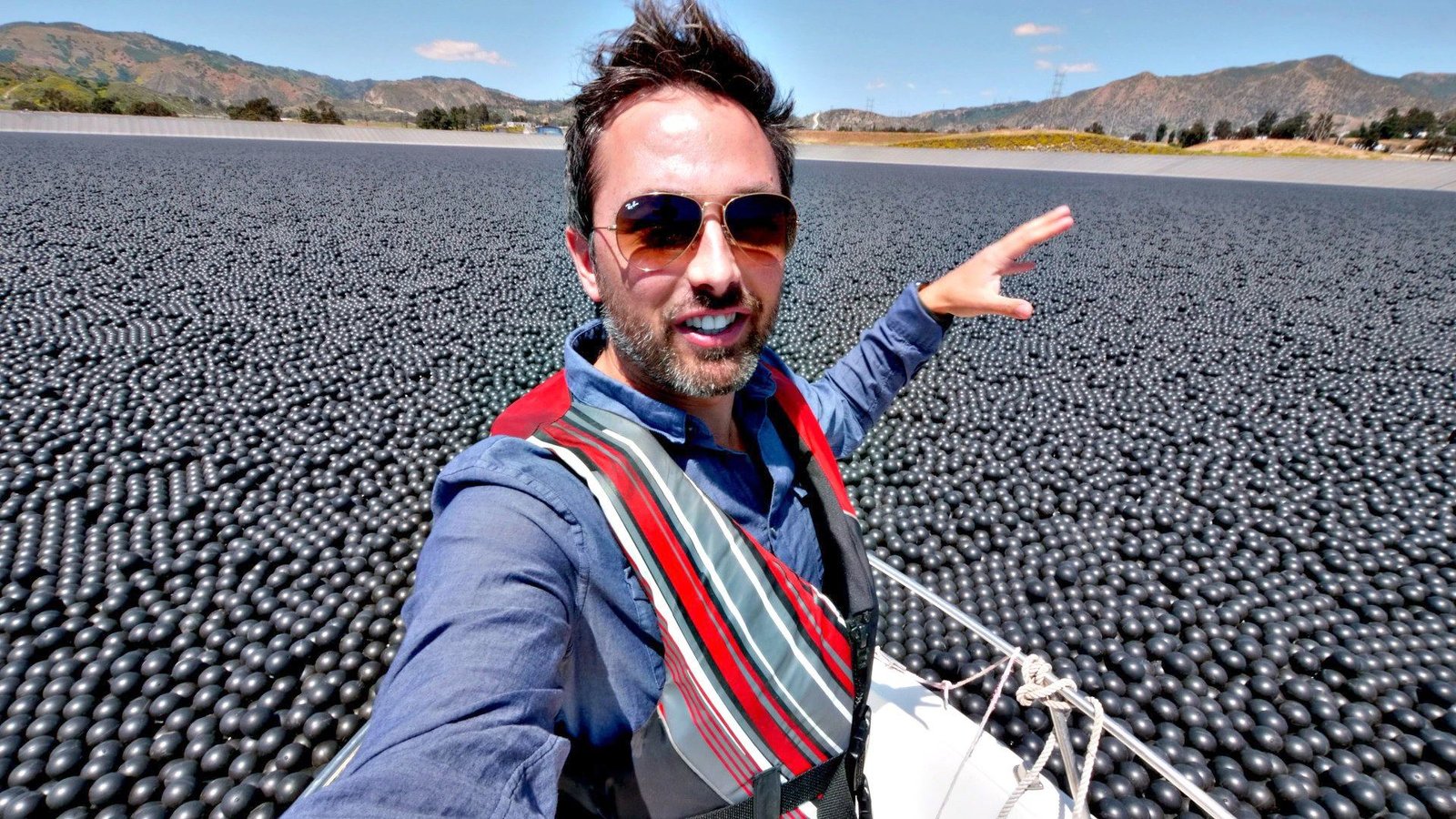
In 2015, millions of people were puzzled by a surprising sight – 96 million small black balls floating on Los Angeles’ reservoir. Many assumed they were there to fight California’s drought by cutting down on evaporation. While that’s partly true, the real reason for these “shade balls” was about much more than just saving water.
Los Angeles needed to protect its drinking water from a hidden issue caused by sunlight. Sunlight can react with chemicals naturally found in the water, especially bromide, and when chlorine is added to clean water, a dangerous chemical called bromate can form. Bromate is linked to cancer, making it important to control carefully.
To stop this, the city covered the reservoir with shade balls — small plastic spheres coated with a special black pigment that blocks harmful ultraviolet rays. Filled with a little water so they don’t float away, these balls create a protective layer on top of the water. This layer blocks sunlight, preventing the dangerous chemical reactions that form bromate.
Aside from protecting water quality, the balls also keep dirt and birds out and help reduce evaporation. Though some people thought the idea was strange or wasteful, it turned out to be a cost-effective and smart solution. The project cost $34.5 million, but the savings from preserving water and avoiding expensive treatments were huge.
While shade balls may not work for all water storage, they were the perfect fit for Los Angeles. Building covers out of metal or fabric would have taken much longer and cost much more. The black pigment helps the plastic last a long time—up to 25 years—making this project a long-term investment in public health.
What started as a curious internet topic became a symbol of innovation and care for the environment. The shade balls remind us that sometimes, unusual ideas are the key to solving big problems, protecting both water resources and the health of millions of people.